Category: Maximal View

Articles on Product Management

  • 3 Key Factors Maximize Product Manager Success

    3 Key Factors Maximize Product Manager Success

    Are misunderstandings of the Product Manager job robbing your product managers of success?


    About the Author: Greg DiCillo is the president and co-founder of Maximal, a consultancy specializing in Industrial Product Management, developer of Maximal Strategist Product Management Software, and an expert in the principles and methodologies of product management. During his career he has managed product lines, instituted product-management processes where none existed, and provided training and consulting services to a diverse group of manufacturing and service companies, middle-market to Fortune 500. Here, he brings you windows of insight, from over twenty years of experience, into the dynamic and complex role of the product manager.


    If you ask individuals to define the Product Manager role, you’ll get as many definitions as the people you ask. In other words, everyone’s perspective about the job is different. Which speaks directly to the fact that the role is not fully understood. If role confusion occurs, the job that product managers do will differ dramatically, even within the same organization. The more different the behavior, the more frustrating it gets.

    What is the Product Manager Job?

    As a consultant for Industrial product management, I too have heard many definitions of the Product Manager role. While the definitions of the job vary, there are several expectations that are consistent. In the end the expectations most organizations want from their Product Managers include:

    • Manage products throughout the product lifecycle.
    • Maximize the financial performance of the product line(s).
    • Understand the needs and requirements (current and future) of the markets they serve.
    • Create product strategies that are competitively positioned and differentiated.
    • Provide credible business justification for the strategy recommendations.

    Why the Frustration?

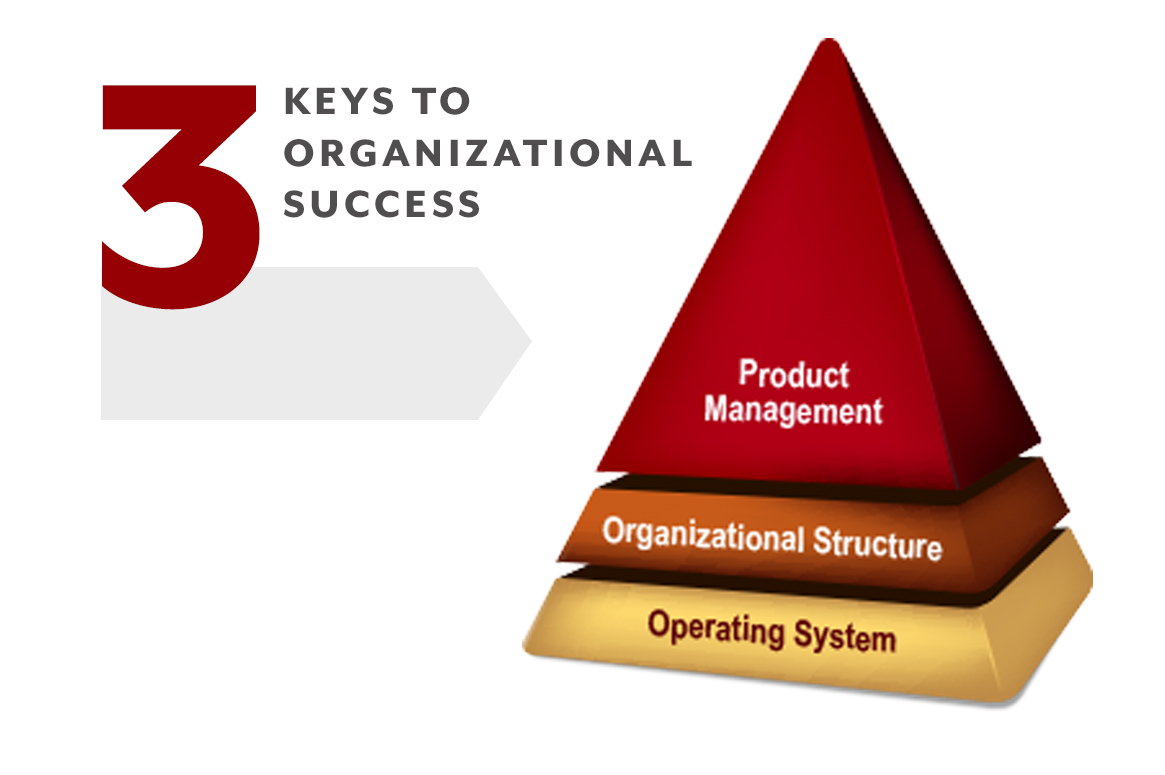
    If you’re thinking “That’s exactly what I want from my product managers,” you’re not alone. You’re also probably wondering why you’re not getting it the performance you want. You’re not alone there either. The difference between what you want and what you get can be attributed to three factors:
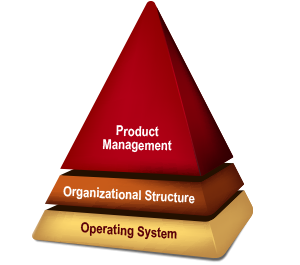
    1. People
    2. Organizational Structure
    3. Operating System

    These key factors are the cornerstones of product manager success. Conversely, when one or more of these factors break down, that failure can cripple the success of the Product Manager.

    Failure Modes Limit Product Manager Success

    It’s not always easy to understand where the disparity exists. However, there are signs that can indicate failure modes that will limit product manager success.

    People – The placement of seniority or familiarity over capability. Organizations frequently assume that the people intimately associated with a product line as natural choices for the role. Unfortunately, they may lack other critical dimensions required for the role. Hiring product managers requires all the aspects of the role be considered. If not, you are likely to end up with tactical, internally focused individuals, instead of the proactive strategic business managers you expect.

    Organizational Structure – Job descriptions that are vague and focus on a laundry list of tasks that drive tactical actions. Incomplete performance metrics that drive the wrong behaviors. Changing product manager performance requires clearly outlining expectations in the job roles and responsibilities. It also requires metrics that encourage and measure the desired behavior and outcomes.

    Operating System – Product plans, market requirements, and other product manager outputs are inconsistent. Tools are ad hoc or incomplete. Storing critical information in disparate locations, making it hard to find and difficult to share. Product managers are in a seemingly endless loop creating and re-creating presentations, spreadsheets, and documents spending less time looking forward and planning ahead.

    Fear Not, There is Hope

    These are just a few examples of the failure modes that limit product manager success. There is great potential for individuals and the entire organization to profit by taking the time to understand the key factors that lead to product manager success and unleash this key strategic position in a way that maximizes its impact.

    It is impossible to cover of each of the factors within a single article. I’ve developed a series of articles which will equip you to maximize the profitability and impact of this key position. In the upcoming weeks we will be covering:

    • Insights necessary for hiring the right people for the job. Product managers need so much more than just product knowledge or experience. We’ll be breaking down the skills to look for in the person you’re considering for your product management position.
    • Your organizational structure can be set up for product manager success. By providing essential job description and metrics, clarity can be achieved and goals targeted.
    • Providing the right tools to the position streamlines a product manager’s ability to conquer this complex role and maximize profitability.

    In the upcoming weeks I’m excited to share the insights I’ve garnered with over twenty years of experience. These insights will provide keys necessary to maximizing the potential of product managers and getting the most out of your product. Be sure to follow me on LinkedIn or check back weekly as this exciting series develops.


    This image has an empty alt attribute; its file name is GapDiscovery_Icon2.png

    Are You Experiencing Gaps in Your Product Management?


    If you suspect your organization has a product management problem, Maximal’s GAP Discovery™ process  can help you find your GAP areas, identify ways to fix them, and put your company on the right path to high performance product management.

    Maximal Strategist software removes the GAPS typically associated with product management. Help your product managers be more effective in the areas of planning, strategy and marketing. Help your product managers be more effective in the areas of planning, strategy and marketing.


    This image has an empty alt attribute; its file name is Screen-Shot-2019-02-05-at-5.40.08-PM.png

    Dominate Your Space: Unleashing the Power of Your Product Managers

    By Greg DiCillo

    The most crucial component of a company’s success is delivering new and better products—yet one of the most common factors for failure is under-utilizing or misunderstanding the role of product management. Dominate Your Space: Unleashing the Power of Your Product Managers explains the essentials for building and sustaining a high-performance product management team that will oversee all stages of a product’s life cycle and help fuel profits in any economy.


    Purchase on Amazon »


  • Product Manager’s Dilemma

    The solution lies in the soft skills critical to a product manager’s success.


    Product Management Consultant Greg DiCillo

    About the Author: Greg DiCillo is the president and co-founder of Maximal, a consultancy specializing in Industrial Product Management, developer of Maximal Strategist Product Management Software, and an expert in the principles and methodologies of product management. During his career he has managed product lines, instituted product-management processes where none existed, and provided training and consulting services to a diverse group of manufacturing and service companies, middle-market to Fortune 500. Here, he brings you windows of insight, from over twenty years of experience, into the dynamic and complex role of the product manager.


    Your product manager is, by nature, one of the most omniscient members of your business community.  Like a CEO, the product manager has a bird’s-eye view of your company and your market. The role of a product manager is to take this birds-eye view, and put it to work in planning and strategy. This planning considers heavily both the marketing aspects of your product line and the company’s capabilities. In order to do this your product manager is managing a complex set of activities coming in from every direction, leading people in a number of different departments towards a common goal. They’re doing all this with one major limitation—they don’t control the resources of the company.

    If you’re asking, “How can my product managers be owners, planners, marketers, strategists and leaders when they don’t actually control the resources at their disposal?” then you’ve just uncovered one of the most defining aspects of product management and why it is so tricky: “The Product Manager’s Dilemma.”

    Dilemma Defined

    The Product Manager’s Dilemma is the realization that product managers have responsibility and accountability for the success of the product line but have little or no authority over the resources that are ultimately needed to be successful. It is the reason that credibility and influence are as important as any and all technical or product expertise for a product manager.

    Product managers are not CEOs in a literal sense, even though we encourage them to behave as entrepreneurs and business leaders in their role. The product manager’s dilemma is how to get what they need from the organization when they don’t have the authority to force decisions that are favorably biased towards their view of the marketplace.

    So the product manager has power in a limited sense, but does not have the authority to move the resources of the larger organization. Despite being in charge of the product line, these managers rarely have the final say or immediate authority to make wholesale changes, and so they must be capable of making recommendations and confident enough to defend them. That means product managers must be credible, and credibility comes from self- confidence, knowledge, preparedness and the ability to effectively influence decisions and communicate strategy.

    Credibility and influence are as important as any and all technical or product expertise for a product manager.”

    Greg DiCillo, President | Maximal

    Unfortunately, not enough emphasis is placed on developing these attributes. As a result, even product managers that are strong technically and responsible for large product lines are limited in their effectiveness because they are incapable or fearful of making recommendations with any conviction.

    Overcoming the Dilemma

    Much of the credibility a product manager has or does not have is based in the substance of their recommendations. To achieve the level of credibility that a product manager needs to effectively manage their product lines, they must communicate and procure the resources they require to be successful. They have to overcome the product manager’s dilemma. The key to overcoming the product manager’s dilemma is to develop five influencing techniques:

    1. Expertise—The best way for a product manager to establish credibility is to become the expert in their markets. The real value a product manager brings to an organization is the understanding of the needs and wants of the markets. The true measure of credibility comes when people within the organization come to the product manager for their advice.
    2. Leadership—Product managers are champions of the product line and, as such, must always be out front. They must engage and collaborate with their stakeholders, but as the leader of the product line they must be accountable for the decisions and the outcomes. Credibility comes from standing up for what they believe to be true and the courage of their convictions when making decisions and recommendations.
    3. Idea Generation—Product managers must be capable of generating ideas. If they are truly experts in their fields, they will know the needs of the markets they serve and have ideas for how to best position their products. Going into meetings with a blank sheet of paper just doesn’t help a product manager’s credibility.
    4. Relationship-Building—An effective product manager knows how to build bridges with the other functional areas in order to get things done. A product manager who is incredibly savvy in business can’t get anywhere without the ability to win friends across departments. The product manager needs everyone in the organization to perform if they expect to succeed.
    5. Planning—Credible product managers work with short-term and long-term plans as their guides. This allows them to effectively navigate through the constant bombardment of ideas, requests and issues that they deal with each day. It allows them to make decisions and recommendations in a more timely fashion and with more confidence.

    Product managers who hone these techniques will be much more likely to overcome the product manager’s dilemma. It’s not likely that product managers are ever going to control all the resources required to get the job done. Honing inter-personal skills and enhancing credibility will go a long way towards greater influence and more effective outcomes.


    Are You Experiencing Gaps in Your Product Management?


    If you suspect your organization has a product management problem, Maximal’s GAP Discovery™ process  can help you find your GAP areas, identify ways to fix them, and put your company on the right path to high performance product management.

    Maximal Strategist software removes the GAPS typically associated with product management. Help your product managers be more effective in the areas of planning, strategy and marketing. Help your product managers be more effective in the areas of planning, strategy and marketing.


    Dominate Your Space: Unleashing the Power of Your Product Managers

    By Greg DiCillo

    The most crucial component of a company’s success is delivering new and better products—yet one of the most common factors for failure is under-utilizing or misunderstanding the role of product management. Dominate Your Space: Unleashing the Power of Your Product Managers explains the essentials for building and sustaining a high-performance product management team that will oversee all stages of a product’s life cycle and help fuel profits in any economy.

    Purchase on Amazon »


  • Product Lifecycle Management: Strategic for Growth

    Are You Using Product Lifecycle Management to Achieve Your Growth Goals?

    For many organizations, the answer is No. When it comes to Product Lifecycle Management, organizations and their Product Managers tend to place substantial emphasis on the early stage of the product lifecycle, (Introduction) and not nearly enough time on products in the advanced stages (Growth, Maturity, and Decline).

    Regardless of the reasons, most Industrial, B2B companies are making a miscalculation by failing to execute comprehensive product lifecycle management. They miss out on the impact a thorough analysis of the existing product mix can have on the company’s ability to drive growth.

    The Importance of Product Lifecycle Management for Advanced Stage Products

    Industrial companies deal with three important realities: (1) Revenue and profits from the existing product mix represent as much as 75% or more of the entire product portfolio! (2) Industrial products tend to have longer product lifecycles. (3) New product development takes longer and is costlier to implement.

    While new product development is essential, company growth is still very dependent on the continued viability of existing products as the foundation for long term growth. In today’s business environment, where revenue and profits of existing products are under increasing competitive pressure and risk, additional time and effort, should be spent proactively managing existing products.

    Comprehensive Product Lifecycle Management Increases Your Strategy Options

    When Product Lifecycle Management is primarily focused or heavily driven by Introductory stage products (New Product Development) only 2 of four strategy options (Product Development and Diversification) are in play.

    When focus to existing products in the Growth, Maturity, and Decline stages of the lifecycle is added, Product Managers put the other 2 strategy options (Market Penetration and Market Development) in play as well.

    Optimize Product Lifecycle Management Maximize Growth

    New product introduction is essential to the vitality of a product line and the long-term health and profitability of a company, but it comes with high cost and risk. It also only addresses 25% of the product lifecycle, and 50% of your strategy options.

    Comprehensive Product Lifecycle Management, allows organizations and their product managers, to balance risk and cost more effectively. Product Managers will have more strategy options to accommodate short- and long-term needs. Ultimately, Product Managers will optimize their product portfolio, target products to markets more effectively,  maximize financial results, and drive growth.

    Greg DiCillo, president of Maximal Product Management and author of Dominate Your Space: Unleashing the Power of Your Product Managers, shares his research insights with companies that want practical steps to establish a culture of high-performance product portfolio management.

    Simplify your Product Management with Maximal Strategist , a comprehensive tool designed for a complex role.


  • Four Capabilities Product Management Should Possess

    Four Essential Product Management Capabilities

    Product Management in Industrial, B2B organizations needs to think strategically and have a proactive vision and market orientation to go with the ability to manage a business. Unfortunately, organizations often have Product Managers who think more tactically; are reactive, product-centric and prone to managing projects and programs rather than products.

    So why does this gap exist?

    One reason is because Product Management is more complex than most organizations appreciate. Industrial Product Management requires individuals in the role to be entrepreneurial, market focused, and strategic, while also being knowledgeable about their products and applications.

    Often, individuals in these roles meet the product and application knowledge requirements but lack other essential capabilities necessary to perform the role effectively.

    The 4 essential Product Manager capabilities include: business management, planning, marketing, and strategy.

    Business Acumen

    The product manager role should include managing all aspects related to the product line as if it was his or her own business. As business “owners,” product managers must be adept at developing product or brand goals that are realistic and aligned with corporate objectives. Product Managers should be proficient in measuring and monitoring product line revenue and profit performance. They should also be capable in their understanding of product line costs such as product development and maintenance, manufacturing, inventory, and associated sales and marketing costs.

    Planning Skills

    Product Managers must be skillful planners and portfolio managers. They should be expert product lifecycle managers capable of identifying the best ways to optimize the product line to maximize results. Product Managers must be balanced between introducing new product and service requirements and managing existing and mature products. They need to proactively define and execute product end of life activities. Product planning must include short-term to meet existing market needs but must also contain a long-term element to anticipate or uncover changes in requirements, usage, and applications over time.

    Marketing Aptitude

    Product managers should be the resident experts on their market(s). The product manager role requires depth of knowledge beyond understanding market size, share, and growth rates. They should have an intimate knowledge of market segments and the needs, wants, or unmet needs of the customers in each segment. Product Managers must be proficient when assessing the viability of adjacent and emerging markets and competent when evaluating the market trends that impact the viability of their product offerings. Highly effective Product Managers continuously scan the landscape to identify opportunities to differentiate and maximize value.

    Strategic Mindset

    Successful product managers should have an aptitude for developing comprehensive strategies that consider all aspects of the marketing mix (product, price, place, and promotion) for their products and product lines. They must be able to differentiate their product offerings in their target markets. They must be able to develop and articulate sustainable competitive strategies that are based on value. They must be skillful in developing appropriate pricing and discounting strategies based on their understanding of the market segments.

    Summary

    The Product Manager role is broader than product expert and project manager. Think of your Product Managers as business owners within the business. If you want to maximize the impact product management can have on your organization, start by looking for these capabilities in your Product Manager candidates and strive to develop these skill sets in your product management organization.

    Greg DiCillo, is president of  Maximal Product Management and author of Dominate Your Space, Unleashing the Power of Your Product Managers. Maximal is a consulting and training firm specializing in Industrial,  B2B Product Management.

    If your tired of ad hoc Product Manager tools and templates, visit Maximal Strategist, and learn about a software tool for Product Managers designed specifically to help them build comprehensive product portfolio strategies.  

  • 4 Ways to Enhance Product Manager Leadership

    Employ these Product Manager Leadership tips and realize better outcomes

    Product manager leadership is crucial because despite being in charge of their products, product managers rarely have the final say or immediate authority to make wholesale changes. Instead, they must skillfully navigate the organization’s cross-functional matrix to procure the resources they require.

    Here are four tips product managers can employ that will enhance product manager leadership skills:

    Initiate Action

    Product management is a leadership role and leaders’ initiate action. Taking the initiative demonstrates a willingness to take responsibility and ownership of the product offering. Action displays a readiness to lead the conversation. Confirms an acceptance of the associated challenges and risks. Establishes the product manager as the leader and focal point for product discussions, enabling the product manager to facilitate discussions relevant to the product line.

    Build Relationships

    The Product Manager needs everyone in the organization to perform if he or she expects to succeed which means they must be skillful building relationships and bridges with other functional areas. One of the best ways to establish relationships is by taking time to understand issues and problems your products may have on other parts of the organization and help identify ways to resolve them. Carefully nurture your associations because a little empathy goes a long way towards establishing stronger relationships and healthier collaboration.

    Lead with Ideas

    People feed off ideas, and product managers should initiate discussion by bringing ideas to the table. Not all ideas are going to be good and not all will be accepted (nor should they), but by putting ideas out there for all to evaluate, product managers will foster more thoughtful and diverse insights, as a result ideas evolve, consensus can be shaped and acceptance can be facilitated.

    Engage Key Decision Makers

    If you want to be taken seriously you need to be fully engaged. Strategic product managers recognize the importance of keeping key decision makers in the loop. Be sure they have the facts. Be willing to speak the truth. Have the courage of your convictions. Effective engagement with key decision makers gives product managers access to influential individuals who can help obtain resources, support internal selling of concepts, and overcome obstacles throughout the organization.

    Summary

    Leadership isn’t easy, but for product managers to succeed in their role product manager leadership is crucial. If you are willing to employ even one of these tips and do them consistently, you will enhance your product manager leadership skills and realize better outcomes.

    Greg DiCillo, president of Maximal Product Management (and author of Dominate Your Space: Unleashing the Power of Your Product Managers) shares his research insights with companies that want practical steps to establish a culture of high-performance product portfolio management.

    Check out Maximal Strategist. Finally, a Product Manager tool that fits the Product Manager’s Role!

  • 3 Ways to Enhance Product Manager Credibility

    Enhance Product Manager Credibility and Gain Influence

    Product managers must be credible, and Product manager credibility comes from self-confidence, knowledge, preparedness and the ability to effectively influence decisions and communicate strategy. Unfortunately, many product managers fail to recognize the importance of influence.

    Product Manager credibility is based in the substance of their recommendations. Product managers must communicate and procure the resources they require to be successful. Here are three things you can do to and three rules to keep in mind to enhance your product manager credibility:

    1. Know your Product Mix

    Become the resident expert for your product line. Understand the product line gaps and overlaps. Be aware of the strengths and weaknesses of your products and your competition. Manage the financials of the product line like a business. Be open-minded when assessing new product ideas and opportunities against your current product offering. Be the person that others in the organization come to for all things about your product.

    Rule: Manage your product portfolio like an investment fund manager.

    2. Understand the needs of the Markets

    Product Managers can add significant value to their organization by understanding customers and applications and using that information to bring solutions to the market that match customer needs. When they gain a deeper understanding of markets and applications, Product managers will make better judgments concerning their product portfolios. Market focused Product managers use deeper insights to create sharper strategies  that are differentiated and better positioned against the competition.

    Rule: Understand what game you’re playing before you decide how you’re going to win.

    3. Planning Power

    One of the most influential actions a product manager can take is the development of a written plan and strategy for their product line — not a product requirement document, but rather a thoughtful, strategic, and comprehensive plan for the product line. A written plan provides the framework from which product managers operate. It becomes the guiding document for all decisions and the basis for assessing new opportunities.

    Rule: When in doubt refer to the plan.

    Summary

    Product manager credibility is enhanced when you master these techniques. Your standing among your peers will be improved when you incorporate even one of these steps in your day-to-day work. Follow these three rules and implement these three steps, and you will improve your ability to influence and establish your position as as a product line leader.

    Greg DiCillo, president of Maximal Product Management (and author of Dominate Your Space: Unleashing the Power of Your Product Managers) shares his research insights with companies that want practical steps to establish a culture of high-performance product portfolio management.


  • 4 Tips to Maximize Product Manager Roles

    Manage Product Managers? These 4 Tips will help you Maximize Product Managers Roles

    Because most companies long for strategic, forward-looking business leadership from their product managers, it’s crucial that managers actively support the desired behaviors.  Here are four tips Managers can implement to maximize product manager roles.

    TIP #1: DEFINE PRODUCT MANAGER ROLES AND RESPONSIBILITIES.

    Product managers must have clearly defined roles, not just a list of tactical activities. You may have a variety of product manager roles, depending on your organization and its needs. Multiple product manager roles are not uncommon, and all are extremely important. Clearly defined product manager roles and responsibilities direct product managers toward the crucial actions needed to be most effective, while eliminating wasted time spent “in the weeds” and “majoring in minor things.”

    TIP #2: ESTABLISH APPROPRIATE METRICS TO MEASURE AND MODIFY BEHAVIOR.

    You want your product managers to be strategic, market-oriented business managers, therefore, measure them using metrics that encourage this behavior. Measuring success for product manager roles solely on tactical activities will force product managers more tactical. Establish balance between strategic and tactical metrics. Since you want performance to change you must reward the behaviors you desire.

    TIP #3: DEFINE RULES OF ENGAGEMENT BETWEEN PRODUCT MANAGEMENT AND OTHER FUNCTIONS.

    Product managers are responsible for overall product success, but rely on other functional areas for the execution of product and market strategies. Clearly define the responsibilities each functional area has related to product success. Set clear expectations to avoid finger pointing and confusion. Clearly delineate how the organization and product manager roles will interface with one another. Product managers have overall responsibility for the product line, but success is accomplished when each functional area plays its role.

    TIP #4: HIRE THE RIGHT PEOPLE.

    Product managers must be generalist and specialist, but Product manager roles also require business management, strategy, leadership, and interpersonal skills. In addition, product managers must have strong product and market knowledge. Build a complete profile for each product manager roles based on skills and abilities, personal traits and characteristics, and knowledge. As you analyze each individual, fit will be more easily identified, the result, a better match to specific Product Manager roles.

    Summary

    A clear, well-understood definition and structure is crucial to effective product manager roles because product managers depend so highly on those around them. Don’t worry if you already have a fully staffed product management organization. Implement these four steps to help you re-assess and re-align your current product manager resources or assist you as scale your product management organization for growth.

    Greg DiCillo, president of Maximal Product Management (and author of Dominate Your Space: Unleashing the Power of Your Product Managers) shares his research insights with companies that want practical steps to establish a culture of high-performance product portfolio management.  


  • Resolve to Overcome these 6 Product Manager Mistakes

    Fix or Avoid these Six Common Product Manager Mistakes and Maximize your Role

    Happy New Year! The new year offers each product manager time for reflection, assessment, and of course resolutions for self-improvement and greater achievement. The quest to be better product managers is a work in progress as we try to keep pace with an ever evolving and dynamic marketplace.

    The practice of product management is unique in its demand for individuals to be capable planners, strategists, marketers, owners, leaders, and managers. It is a paradox with the expectation that individuals in the role be responsible and accountable with limited authority. It is a role that is truly satisfying and rewarding.

    For those of you aspiring to achieve higher performance, improved efficiency and increased effectiveness as a product manager in 2018, I offer you this list of 6 of the most common product manager mistakes to fix or avoid.

    As you review this list, do so with the understanding that very few product managers make all of the mistakes listed, but if you are a product manager looking to enhance your effectiveness, correcting even one of these mistakes will get you closer to achieving your goal.

    Mistake #1: Working without a Written Plan

    The lack of a written plan can lead to wild changes in strategy because no one can point to specific reasons for why things are being done. The instability created by this product manager mistake is toxic to effective product development and product line management.

    Written plans crystallize the market needs and associated product requirements and provide the documentation, reasoning and commitments that drive what is to be done. It also provides the centerpiece for changes and modifications, which, when documented, add clarity and keep all the resources focused and on track.

    Mistake #2: Lack Strategic Marketing emphasis

    Many product managers talk about doing market analysis, but most don’t ever get close enough to their customers or prospects to fully understand their true needs or wants, appreciate how products can be differentiated, or recognize which adjacent markets should be explored.

    The level of commitment a Product Manager has to strategic market analysis —and how effective he/she is at it—makes a significant difference in product planning and 4P strategies. Product managers who market strategically have offerings that are better positioned in their markets, will target their market segments better, and define product requirements that are aligned better with customer needs.

    Mistake #3: No Lifecycle Planning

    It is never a good sign when a product manager says, “I’ve got so many products in my product line I can’t manage them.” This product manager mistake is indicative of someone who is not lifecycle planning.

    Managing a product portfolio is like managing an investment fund. Product Managers need to be capable lifecycle managers knowing when to get rid of under-performers, how to leverage good performers and when to introduce new products that enrich the portfolio over time. This means that lifecycle management must be at the center of product management strategy rather than a one time event.

    Mistake #4: Failure to Lead

    The product manager role is one of leadership. Not all product managers embrace this. Leadership is a quality that is hard to define, but it’s perhaps most obvious in its absence. With this product manager mistake the organization is usually late to market and playing catch-up.

    Leadership, means taking risks and making trade-offs. It means opening yourself up to criticism when a product fails or when your judgment is wrong. Leadership is having the facts about your business and being able to stand up and say, “As the leader of the product line, I feel this is the direction we need to go” then plant your feet, have the courage of your convictions, and be the champion of your product line.

    Mistake #5: Myopic Product Focus

    Product managers who exhibit myopic product focus are those who fail to define the “whole product,” and see only the features and functionality of the physical product. Focusing solely on features without looking at the whole product minimizes the overall value of your product offering.

    When the broader picture is understood, product managers can start to consider product solutions that include the tangible and intangible qualities that customers are looking for. This is where product managers can bring added value to the customers and create sustainable competitive advantage.

    Mistake #6: Following a Single ‘P’ Strategy

    The one thing product managers have more control over is the Marketing Mix, the ability to create product strategies that utilize the 4Ps: Product, Price, Place and Promotion. Unfortunately, many product managers don’t recognize or don’t understand the importance of employing all four Ps as part of their product-line strategies.

    For B2B product managers that oversee product lines with long life cycles, place, promotion and pricing are significant levers to pull for long term growth and profitability. Spend some time analyzing the other Ps, maybe the product is in the wrong channel or the value proposition isn’t accurately established for the market. Perhaps the product is not effectively differentiated to support the pricing. Possibly the product offerings are not targeted to the right market segments.

    Summary

    No product manager is immune from making these mistakes, the important thing is that you recognize the mistakes you’re making and take the appropriate action to fix or avoid them. If you find that you are making multiple mistakes on this list, don’t be discouraged, you’re not alone. Take them one at a time. Identify the mistake on the list you believe is the most significant to you and focus on it. The result is worth the effort.

    Greg DiCillo, president of Maximal Product Management (and author of Dominate Your Space: Unleashing the Power of Your Product Managers) shares his research insights with companies that want practical steps to establish a culture of high-performance product portfolio management.

  • Five Qualities Product Managers Must Have

    If Product Managers have these 5 qualities, they are more likely to be high performers.


    1. Entrepreneurial and experimental (versus conservative and bureaucratic).

    Effective product managers function at a high level as business owners, marketers, strategists and planners. Entrepreneurial product managers perform like CEOs or GMs. As a result, product lines and portfolios are managed like a business.

    2. Management-driven (versus task-driven).

    Effective product managers actively monitor how products are performing in the marketplace. They know how dynamics in the market are changing. High performers understand what competitive changes merit attention. They know how to plan, manage, and address market feedback. Consequently, they provide better focus and direction to all stakeholders.

    3. Market-driven (versus project-driven).

    Good product managers are skilled marketers. They see and respond to GAP areas − unmet or under-served needs − in the marketplace. Their job is to go out in the marketplace, interact with customers and then bring back recommendations based on these interactions. In essence, they view the market from the customer’s point of view.

    Product development is NOT product management. You don’t want them managing every detail of product development. You want them to have their eyes and ears focused externally, on the marketplace rather than internally, inside-out. Constantly searching for opportunities and openings to position products in the minds of your customers and ahead of your competitors.

    4. Courageous innovators (versus me-too replicators).

    Innovative product managers see their product lines as opportunities to attack weaknesses and voids in the market. They address opportunities by leveraging products throughout the lifecycle not just new product development. They are even willing to attack their company’s own products to protect market share or open new markets. Therefore, they are better lifecycle managers.

    Unfortunately, many find themselves reacting rather than innovating. Rushing to catch up to a competitor’s latest offering or next technological breakthrough. Responding to knee jerk requests. Reactive product management results in commoditization of products, poor positioning, and zero differentiation.  Hence, product portfolios have inadequate revenue and profitability.

    5. Strategic and forward-thinking (versus tactical reactionary).

    In addition to being “outside-in thinkers,” high performing product managers are forward-thinking. Products have to be planned in advance otherwise Product managers react instead of lead or innovate. They operate by impulse rather than intention.

    Strategic forward-thinking product managers see a vision, develop road maps for products and markets, and use them to direct product development activities as well as manage existing and mature products throughout the lifecycle.

    Greg DiCillo, president of Maximal Product Management (and author of Dominate Your Space: Unleashing the Power of Your Product Managers) shares his research insights with companies that want practical steps to establish a culture of high-performance product portfolio management.


  • Maximize Product Manager Performance

    Five Mistakes to Avoid to Maximize Product Manager Performance and Improve Product Success


    We are asked often about common mistakes that can impede product manager performance and thus the success of products in the marketplace. Experience shows there are five typical problems that product managers should avoid:

    Mistake 1: Lack of Disciplined or Consistent Planning

    The biggest mistake is working without a written product plan. Failure to have a plan really impacts product manager performance. The product plan provides the short and long-term outlook detailing everything from current situation and market trends to goals and strategies that drive product line decisions. The purpose of the plan is to provide focus on product line activities and direction to the organization by balancing the needs of the markets with company capabilities consistent with the corporate business objectives.

    The plan should also focus on the product lifecycle. The lack of sound lifecycle management can thwart a product manager’s performance by causing product proliferation or unwanted cannibalization. Finally, the plan should include appropriate metrics to measure results.

    Mistake 2: Failure to Provide Effective Leadership

    As “product champion,” product managers typically have a lot of responsibility with little or no direct authority. They work in a manner that counts on other functional areas to generate success. Given this reality, product managers must be effective leaders. It does not mean waiting for decisions and direction from above or letting others dictate what should be done.

    Product managers don’t typically manage the resources they require, so they must work with other functional disciplines for support and assistance. The failure in leadership occurs when product managers try to ‘manage’ the people rather than influence the outcome by using their knowledge of products and markets and their product planning and internal selling skills.

    Mistake 3: Too Tactical and Internally Focused

    Product managers who struggle the most are those who focus on the small stuff. We call this “majoring in minor things,” and it definitely impacts product manager performance. The preference is to work on low-level tactical activities at the expense of important strategic issues like strategic visioning, market analysis, and planning. Because many product managers come to product management from other parts of the organization, most have never had to work at a strategic level. The tendency is to migrate toward (1) doing the things they like to do at the expense of doing what’s needed; (2) spending time on things that could best be done by others in the organization; (3) failing to take advantage of expertise and help that can come from others in their organization.

    Mistake 4: Lacking Emphasis on “Market Knowledge”

    Product manager performance often is dictated on gut feel instead of fact. When market-oriented thinking is lacking, product decisions are limited to (1) “me too” and follow the leader products; (2) customer specific requirements that may not reflect the needs of the broader market; or (3) the “field of dreams” approach to product development that assumes, “if we build it they will come”. The true value a product manager brings to an organization is his or her ability to understand the markets and market segments and relate the needs of the markets to the product offering.

    Mistake 5: Inadequate Strategies

    Effective product managers know strategies must incorporate the four P’s of the marketing mix (product, price, place, and promotion) while less experienced product managers tend to focus on product strategy, what we call the single “P” trap. Product managers who escape this single “P” trap will develop more comprehensive strategies for their product lines by taking into account other aspects of the marketing mix that can in some circumstances be more important to product success than the product itself. Stepping out of the single “P” trap also focuses the product manager as a marketer with an eye toward more effectively positioning and differentiating products to take advantage of market segment opportunities. Comprehensive strategies utilizing all 4 P’s benefit everyone in the organization with better product positioning, enhanced value propositions, markets that are more effectively targeted, product pricing and discounts that are aligned with perceived customer value.

    Summing Up

    The first step to correcting a problem is to identify the GAPs that are causing the product manager performance problem. The good news is that now you know the biggest mistakes that impact product manager performance and product and market success. The better news is that you can avoid or eliminate these problems by taking a comprehensive approach to product management. The successful product manager is one who takes an entrepreneurial, visionary, strategic “business owner” approach to the job. Going forward, we’re convinced that product managers and managers that recognize the mistakes early and make the requisite changes in behavior will enhance product manager performance and improve the success of the product line.

    Greg DiCillo, president of Maximal Product Management (and author of Dominate Your Space: Unleashing the Power of Your Product Managers) shares his research insights with companies that want practical steps to establish a culture of high-performance product portfolio management.

    Dominate your SpaceDominate your space