Tag: Product Manager Roles

  • 3 Key Factors Maximize Product Manager Success
    3 Key Factors Maximize Product Manager Success

    Are misunderstandings of the Product Manager job robbing your product managers of success?


    About the Author: Greg DiCillo is the president and co-founder of Maximal, a consultancy specializing in Industrial Product Management, developer of Maximal Strategist Product Management Software, and an expert in the principles and methodologies of product management. During his career he has managed product lines, instituted product-management processes where none existed, and provided training and consulting services to a diverse group of manufacturing and service companies, middle-market to Fortune 500. Here, he brings you windows of insight, from over twenty years of experience, into the dynamic and complex role of the product manager.


    If you ask individuals to define the Product Manager role, you’ll get as many definitions as the people you ask. In other words, everyone’s perspective about the job is different. Which speaks directly to the fact that the role is not fully understood. If role confusion occurs, the job that product managers do will differ dramatically, even within the same organization. The more different the behavior, the more frustrating it gets.

    What is the Product Manager Job?

    As a consultant for Industrial product management, I too have heard many definitions of the Product Manager role. While the definitions of the job vary, there are several expectations that are consistent. In the end the expectations most organizations want from their Product Managers include:

    • Manage products throughout the product lifecycle.
    • Maximize the financial performance of the product line(s).
    • Understand the needs and requirements (current and future) of the markets they serve.
    • Create product strategies that are competitively positioned and differentiated.
    • Provide credible business justification for the strategy recommendations.

    Why the Frustration?

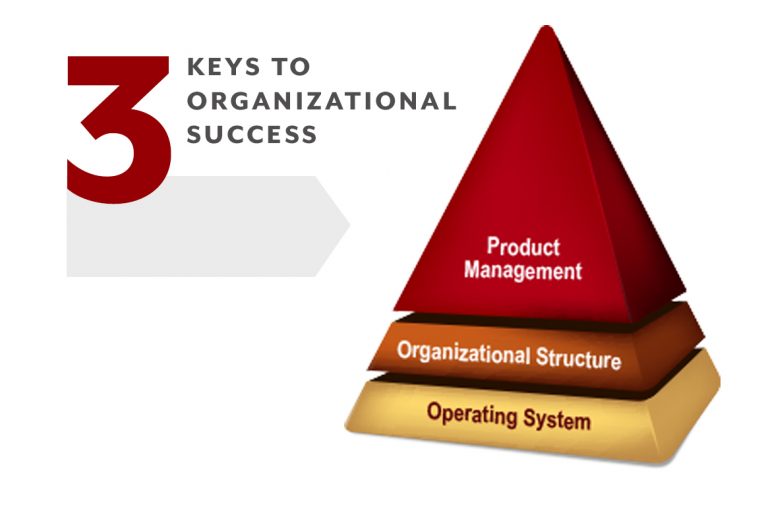
    If you’re thinking “That’s exactly what I want from my product managers,” you’re not alone. You’re also probably wondering why you’re not getting it the performance you want. You’re not alone there either. The difference between what you want and what you get can be attributed to three factors:

    1. People
    2. Organizational Structure
    3. Operating System

    These key factors are the cornerstones of product manager success. Conversely, when one or more of these factors break down, that failure can cripple the success of the Product Manager.

    Failure Modes Limit Product Manager Success

    It’s not always easy to understand where the disparity exists. However, there are signs that can indicate failure modes that will limit product manager success.

    People – The placement of seniority or familiarity over capability. Organizations frequently assume that the people intimately associated with a product line as natural choices for the role. Unfortunately, they may lack other critical dimensions required for the role. Hiring product managers requires all the aspects of the role be considered. If not, you are likely to end up with tactical, internally focused individuals, instead of the proactive strategic business managers you expect.

    Organizational Structure – Job descriptions that are vague and focus on a laundry list of tasks that drive tactical actions. Incomplete performance metrics that drive the wrong behaviors. Changing product manager performance requires clearly outlining expectations in the job roles and responsibilities. It also requires metrics that encourage and measure the desired behavior and outcomes.

    Operating System – Product plans, market requirements, and other product manager outputs are inconsistent. Tools are ad hoc or incomplete. Storing critical information in disparate locations, making it hard to find and difficult to share. Product managers are in a seemingly endless loop creating and re-creating presentations, spreadsheets, and documents spending less time looking forward and planning ahead.

    Fear Not, There is Hope

    These are just a few examples of the failure modes that limit product manager success. There is great potential for individuals and the entire organization to profit by taking the time to understand the key factors that lead to product manager success and unleash this key strategic position in a way that maximizes its impact.

    It is impossible to cover of each of the factors within a single article. I’ve developed a series of articles which will equip you to maximize the profitability and impact of this key position. In the upcoming weeks we will be covering:

    • Insights necessary for hiring the right people for the job. Product managers need so much more than just product knowledge or experience. We’ll be breaking down the skills to look for in the person you’re considering for your product management position.
    • Your organizational structure can be set up for product manager success. By providing essential job description and metrics, clarity can be achieved and goals targeted.
    • Providing the right tools to the position streamlines a product manager’s ability to conquer this complex role and maximize profitability.

    In the upcoming weeks I’m excited to share the insights I’ve garnered with over twenty years of experience. These insights will provide keys necessary to maximizing the potential of product managers and getting the most out of your product. Be sure to follow me on LinkedIn or check back weekly as this exciting series develops.


    This image has an empty alt attribute; its file name is GapDiscovery_Icon2.png

    Are You Experiencing Gaps in Your Product Management?


    If you suspect your organization has a product management problem, Maximal’s GAP Discovery™ process  can help you find your GAP areas, identify ways to fix them, and put your company on the right path to high performance product management.

    Maximal Strategist software removes the GAPS typically associated with product management. Help your product managers be more effective in the areas of planning, strategy and marketing. Help your product managers be more effective in the areas of planning, strategy and marketing.


    This image has an empty alt attribute; its file name is Screen-Shot-2019-02-05-at-5.40.08-PM.png

    Dominate Your Space: Unleashing the Power of Your Product Managers

    By Greg DiCillo

    The most crucial component of a company’s success is delivering new and better products—yet one of the most common factors for failure is under-utilizing or misunderstanding the role of product management. Dominate Your Space: Unleashing the Power of Your Product Managers explains the essentials for building and sustaining a high-performance product management team that will oversee all stages of a product’s life cycle and help fuel profits in any economy.

    Purchase on Amazon »


  • 4 Tips to Maximize Product Manager Roles

    Manage Product Managers? These 4 Tips will help you Maximize Product Managers Roles

    Because most companies long for strategic, forward-looking business leadership from their product managers, it’s crucial that managers actively support the desired behaviors.  Here are four tips Managers can implement to maximize product manager roles.

    TIP #1: DEFINE PRODUCT MANAGER ROLES AND RESPONSIBILITIES.

    Product managers must have clearly defined roles, not just a list of tactical activities. You may have a variety of product manager roles, depending on your organization and its needs. Multiple product manager roles are not uncommon, and all are extremely important. Clearly defined product manager roles and responsibilities direct product managers toward the crucial actions needed to be most effective, while eliminating wasted time spent “in the weeds” and “majoring in minor things.”

    TIP #2: ESTABLISH APPROPRIATE METRICS TO MEASURE AND MODIFY BEHAVIOR.

    You want your product managers to be strategic, market-oriented business managers, therefore, measure them using metrics that encourage this behavior. Measuring success for product manager roles solely on tactical activities will force product managers more tactical. Establish balance between strategic and tactical metrics. Since you want performance to change you must reward the behaviors you desire.

    TIP #3: DEFINE RULES OF ENGAGEMENT BETWEEN PRODUCT MANAGEMENT AND OTHER FUNCTIONS.

    Product managers are responsible for overall product success, but rely on other functional areas for the execution of product and market strategies. Clearly define the responsibilities each functional area has related to product success. Set clear expectations to avoid finger pointing and confusion. Clearly delineate how the organization and product manager roles will interface with one another. Product managers have overall responsibility for the product line, but success is accomplished when each functional area plays its role.

    TIP #4: HIRE THE RIGHT PEOPLE.

    Product managers must be generalist and specialist, but Product manager roles also require business management, strategy, leadership, and interpersonal skills. In addition, product managers must have strong product and market knowledge. Build a complete profile for each product manager roles based on skills and abilities, personal traits and characteristics, and knowledge. As you analyze each individual, fit will be more easily identified, the result, a better match to specific Product Manager roles.

    Summary

    A clear, well-understood definition and structure is crucial to effective product manager roles because product managers depend so highly on those around them. Don’t worry if you already have a fully staffed product management organization. Implement these four steps to help you re-assess and re-align your current product manager resources or assist you as scale your product management organization for growth.

    Greg DiCillo, president of Maximal Product Management (and author of Dominate Your Space: Unleashing the Power of Your Product Managers) shares his research insights with companies that want practical steps to establish a culture of high-performance product portfolio management.